
As people turn to Google AI Overviews, AI Mode, Microsoft Copilot, and Bing-generated summaries for answers, website visibility is no longer measured by rankings alone. Publishers now need to know whether their content appears inside AI experiences, which pages are cited, and what retrieval language led an answer engine to them.
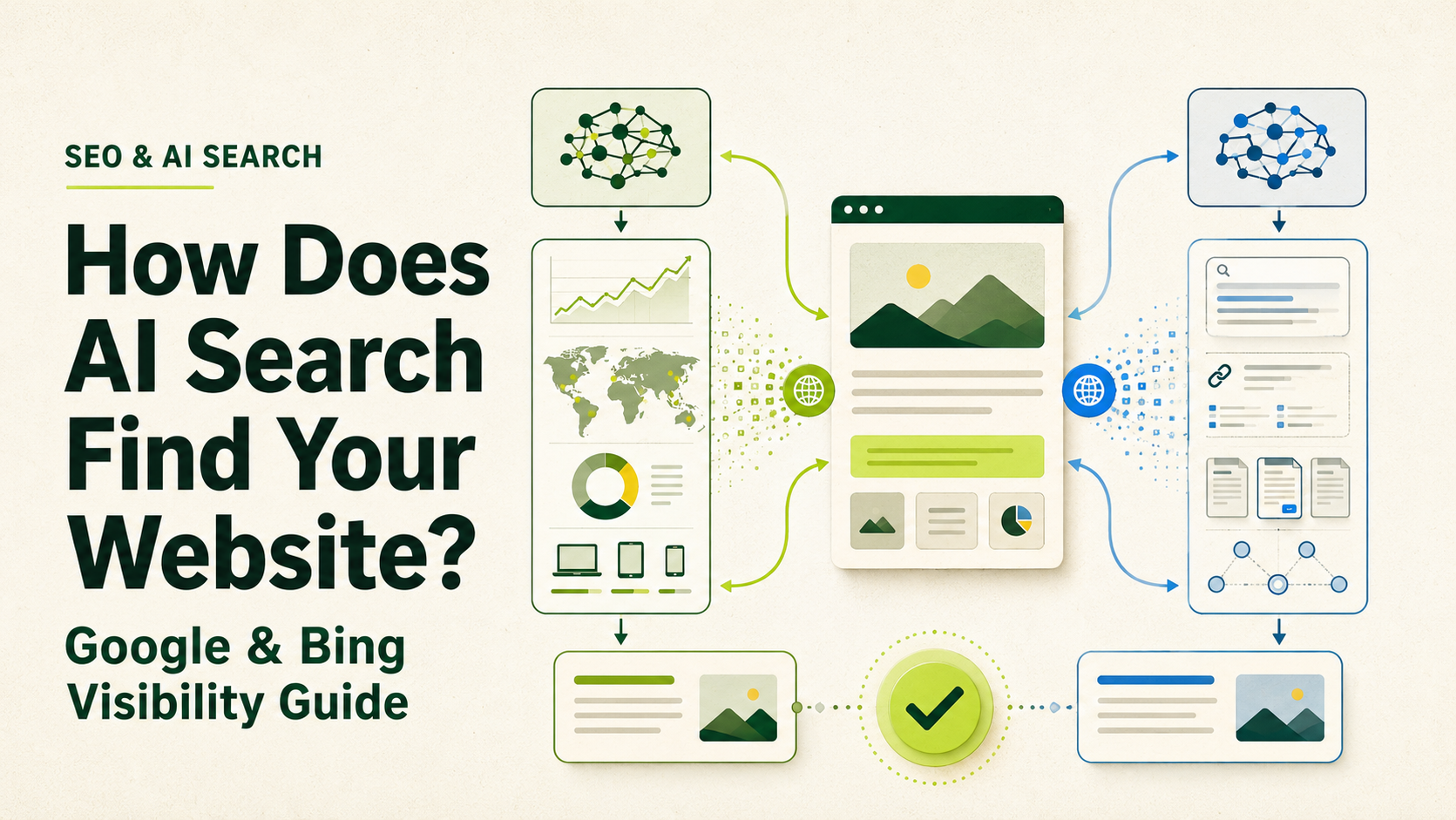
The shift: AI search optimization is moving from informed guesswork toward observable performance. Google now offers a view of generative AI impressions, while Bing reports citation activity and retrieval clues.
1. What Is AI Search Changing?
Traditional search presents a list of links and asks the user to choose. AI search often assembles information from multiple sources first, then produces a summary, comparison, recommendation, or set of steps. A website may influence that answer even when it is not presented as the first familiar blue link.
SEO has not disappeared. AI systems still need to discover a URL, access its content, understand its subject, and assess whether it is useful enough to support an answer. Technical accessibility, clear information architecture, original expertise, internal links, and a good page experience remain foundational.
In practice, these disciplines overlap. The meaningful change is not a new acronym; it is the expanded path from being indexed to being understood, selected, cited, and connected to a useful action.
2. What Can Google and Bing Show You?
Generative AI visibility
Google's dedicated generative AI performance reports help eligible sites understand visibility in AI Overviews, AI Mode, and generative AI features in Discover.
- Impressions
- Pages shown
- Countries
- Devices for Search
- Hourly, daily, weekly, and monthly trends
AI citation activity
Bing AI Performance focuses on how content is referenced across Microsoft Copilot, AI-generated Bing summaries, and selected partner experiences.
- Total citations
- Average cited pages
- Grounding queries
- Page-level citation activity
- Visibility trends
Google's report is best suited to the question, “Which pages are gaining visibility in generative search?” Bing goes further into sourcing: “Which pages were cited, and what retrieval language helped the system find them?”
3. Google vs. Bing: A Quick Comparison
| Area | Google Search Console | Bing Webmaster Tools |
|---|---|---|
| Primary view | Visibility in generative AI features | Citations inside AI-generated answers |
| Surfaces | AI Overviews, AI Mode, and generative AI in Discover | Microsoft Copilot, Bing AI summaries, and selected partners |
| Main metrics | Impressions, pages, countries, devices, dates | Citations, cited pages, grounding queries, page trends |
| Query clues | Limited in the dedicated report | Sampled grounding queries |
| Best question | Where is my site appearing? | When and why is my content cited? |
| Availability | Rolling out to a subset of websites | Public preview |
The reports complement each other. Use Google to understand AI-feature reach, Bing to study citation and retrieval patterns, and your analytics platform to see what visitors do after they arrive. No single metric tells the complete story.
4. Seven Ways to Improve AI Visibility and Citations
Answer first, then add context
If a section asks “What is GEO?”, define it immediately. Add background, examples, and limits after the direct answer. Clear conclusions help readers and reduce ambiguity when a system extracts a passage.
Give each page one primary intent
Near-duplicate pages blur intent signals. Consolidate overlapping articles, use canonical URLs correctly, and make each remaining page serve a genuinely different need.
Create independently understandable sections
Use definitions, comparison tables, steps, checklists, pros and cons, and concise FAQs. Each section should answer a recognizable question without becoming disconnected from the article.
Support claims with reliable evidence
Prioritize official documentation, original research, verifiable cases, and studies with transparent methods. Unsupported numbers look precise but weaken trust.
Align structured data with visible content
Schema can clarify entities and page types, but it must match what readers can see. It is a machine-readable description—not a shortcut around weak content.
Keep content fresh and send accurate signals
Update changed features, facts, and sources. Use meaningful update dates, accurate sitemap lastmod values, and IndexNow where appropriate.
Improve page experience and multimodal content
Make the main information easy to find across devices. Fast pages, clear headings, original diagrams, useful screenshots, descriptive alt text, and aligned captions help both people and machines understand the subject.
5. Your 30-Day Action Plan
Baseline
Export current search data. Verify indexing, sitemaps, canonicals, robots rules, HTTP status, and conversion tracking.
Opportunities
Review visible and cited pages, inspect grounding queries, find thin coverage, and identify overlapping articles.
Optimize
Add direct answers, stronger section structure, evidence, comparison elements, FAQs, media, and accurate structured data.
Validate
Confirm recrawling, compare visibility and citation trends, review engagement and conversions, and document what changed.
Keep a change log for every priority page: date, baseline, edits, sources added, and subsequent visibility, citation, engagement, and conversion movement. AI search data can fluctuate, so avoid treating a single day as proof of success or failure.
6. Frequently Asked Questions
Will GEO replace traditional SEO?
No. Generative search still depends on crawlability, indexing, useful content, information architecture, and authority signals. GEO is better understood as an additional visibility layer built on SEO foundations.
How do SEO, AEO, and GEO differ?
SEO improves organic discoverability, AEO helps content function as a direct answer, and GEO focuses on selection or citation within generative responses. Their practical methods overlap significantly.
Can Search Console show AI Mode queries?
The dedicated generative AI reports currently emphasize impressions, pages, countries, devices, and time trends. They do not provide a complete list of every original prompt used in AI interactions.
Is a Bing grounding query the user's original question?
Not necessarily. It is a retrieval phrase the AI used to find supporting material and may have been rewritten, expanded, or decomposed from the original request.
Does an AI citation always generate traffic?
No. Some people get enough information from the answer, while others click through. Citations can also affect brand awareness and later branded searches, so evaluate direct and assisted outcomes.
Are citation counts a new ranking metric?
No. A citation count shows how often content appeared as a source. It does not reveal placement, importance, recommendation strength, or a universal authority score.
Do FAQs increase AI citations?
FAQs can make questions and answers easier to identify, but the format is not a guarantee. Accuracy, completeness, evidence, intent alignment, and indexability still matter.
How important is structured data?
It can help systems understand entities and content types, but it must accurately reflect visible content. Correct markup supports interpretation; it cannot rescue outdated or low-value information.
Can AI-generated content rank?
The important question is whether the result is useful, original, accurate, and trustworthy. AI can assist research and editing, but human verification and real expertise remain essential.
How often should an article be updated?
Update when facts, products, policies, or reader needs change. Fast-moving tool guides may need monthly or quarterly review; evergreen explanations can follow meaningful changes rather than an arbitrary schedule.
Do sitemaps and IndexNow help with AI search?
They support discovery and freshness, not guaranteed inclusion. Sitemaps provide URL coverage and update information; IndexNow quickly notifies participating engines about changes.
How can AI search optimization be measured?
Establish a baseline, log changes, and compare AI impressions, citations, cited pages, organic traffic, branded demand, engagement, leads, and revenue over a meaningful period.
7. Conclusion
AI search is changing how websites are discovered, but it has not erased the fundamentals. Google's reports add a view of generative AI reach; Bing adds citation and grounding-query clues. Together, they make it possible to replace vague GEO tactics with a more disciplined cycle of observation, improvement, and validation.
Build content that search engines can access, AI systems can interpret, experts can verify, and people can use. Then connect visibility to meaningful actions rather than chasing citations as an isolated score.